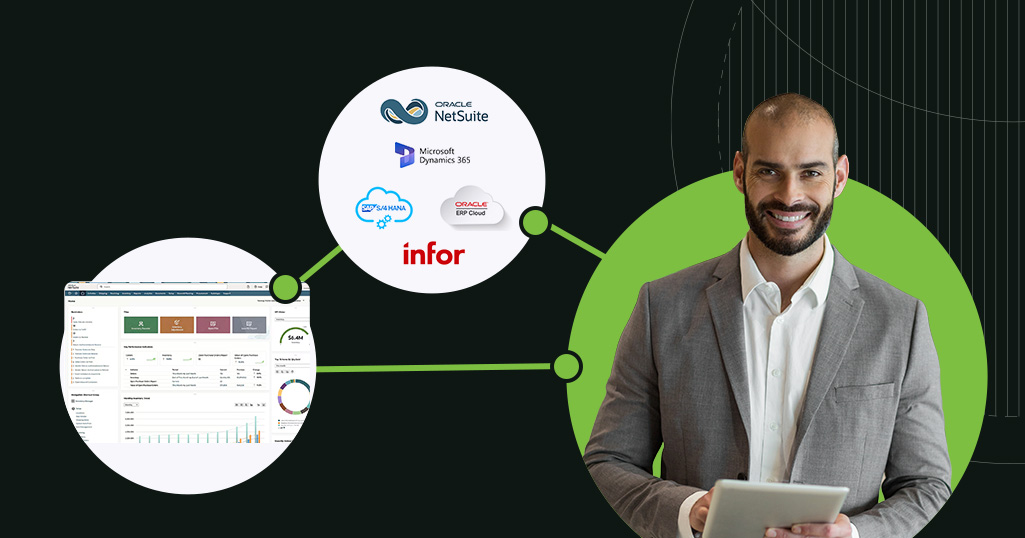
System performance is fundamentally tied to its underlying engine. To select the appropriate ERP, executives must look past the user interface to understand how the architecture manages multi-entity complexity.
ERP Comparison Summary
| ERP System | Best Fit | Architecture Profile | Integration Complexity | Financial Consolidation | Key Trade-off |
| NetSuite | Mid-market to Enterprise multi-entity | Unified, Single-database | Low (Native) | Exceptional (Real-time) | Process standardization vs. local flexibility |
| SAP S/4HANA | Global manufacturing & highly regulated | Federated / Component-based | High (Requires middleware) | Deep / Audit-heavy | Robust control vs. implementation agility |
| MS Dynamics 365 | Microsoft-centric ecosystems | Extensible Modular Ecosystem | Moderate to High | Good (Configurable) | High customizability vs. governance overhead |
| Oracle ERP Cloud | High-volume FinOps / Tier-1 Finance | Tier-1 Enterprise Finance | Moderate | Robust / Complex | Specialized capability vs. total cost of ownership |
| Infor | Vertical-specific (Healthcare/Mfg) | Industry-centric Niche | Moderate | Moderate | Out-of-the-box fit vs. long-term versatility |
1. NetSuite: Unified Cloud Architecture
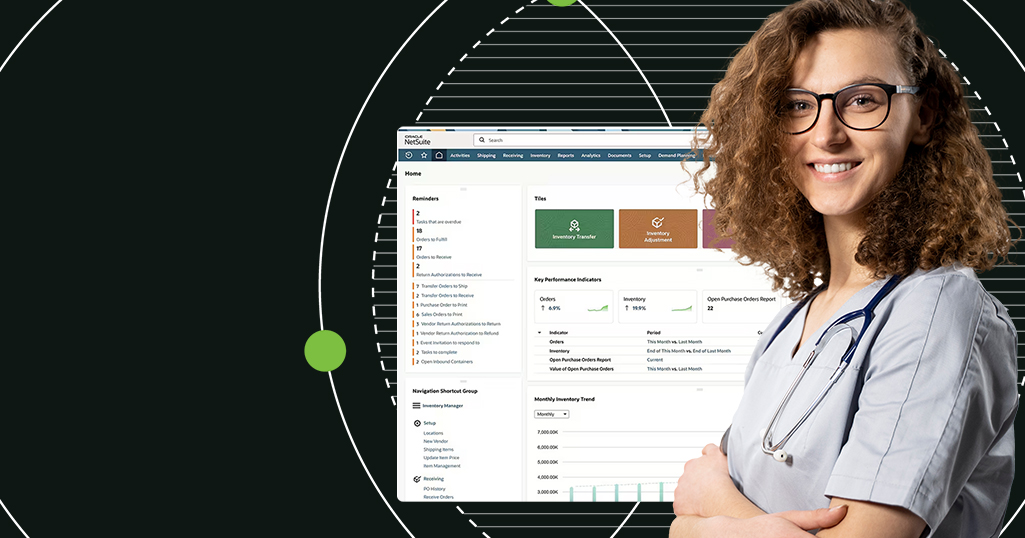
NetSuite is often the primary choice for companies prioritizing consistency across a global footprint. Unlike systems built through acquisitions, it operates on a single unified data model.
- Architecture: A true cloud-native platform where all modules (ERP, CRM, E-commerce) share a single database.
- Financial Strength: It automates consolidation in real-time across hundreds of subsidiaries and tax jurisdictions.
- The Trade-off: NetSuite thrives on process standardization. While highly configurable, it is less suited for companies that require “deep” on-premise manufacturing controls or those that refuse to align their internal workflows with cloud-standard practices.
- Best Fit: Rapidly scaling companies that need a “single source of truth” across multiple entities with minimal IT overhead.
2. SAP S/4HANA: The Industrial Gold Standard
SAP remains the core infrastructure for the world’s largest corporations, particularly those with complex physical supply chains and heavy manufacturing requirements.
- Architecture: A deep, component-based architecture designed to handle massive transaction volumes and complex regulatory requirements globally.
- Financial Strength: Provides an unbreakable audit trail and unmatched depth for global logistics, including specialized requirements for “Process” vs “Discrete” manufacturing.
- The Trade-off: The platform’s depth requires significant specialized talent. Implementation cycles are longer, and the total cost of ownership (TCO) is generally higher than cloud-only alternatives.
- Best Fit: Global, highly regulated enterprises where industrial-scale control and complex supply chain visibility are the top priorities.
3. Microsoft Dynamics 365: The Extensible Ecosystem
Dynamics 365 offers a collection of business applications that integrate natively with Azure, Office 365, and Power BI.
- Architecture: A modular ecosystem where organizations can deploy specific applications (Finance, Supply Chain, Sales) and connect them through the Dataverse.
- Financial Strength: Offers high familiarity for users already in the Microsoft environment and provides significant flexibility for developers to build custom logic.
- The Trade-off: The modular nature requires disciplined data governance. Without a strict architectural roadmap, companies risk creating “digital silos” between different Dynamics modules.
- Best Fit: Mid-market to large enterprises that prefer a modular build-out and are already heavily committed to the Microsoft technology stack.
4. Oracle ERP Cloud: Tier-1 Financial Management
Oracle focuses on high-tier financial capabilities, specifically designed for massive transaction volumes and intricate global treasury environments.
- Architecture: Leverages Oracle’s database leadership to provide a high-performance environment for Tier-1 financial operations.
- Financial Strength: Exceptional at handling complex treasury, advanced tax reporting, and high-volume ledger processing for multi-billion dollar organizations.
- The Trade-off: Maintaining an Oracle environment requires specialized (and often expensive) technical resources. It may be over-engineered for companies with simpler operational models.
- Best Fit: Tier-1 enterprises in financial services, telecommunications, or utilities with exceptionally complex global financial structures.
5. Infor: The Industry-Specific Specialist
Infor distinguishes itself by offering “CloudSuites” that are pre-configured for specific industry verticals.
- Architecture: Multi-tenant cloud architecture with deeply embedded industry functionality for sectors like Healthcare, Food & Beverage, and Fashion.
- Financial Strength: Workflows are designed based on industry-specific benchmarks, which can significantly reduce the need for custom coding.
- The Trade-off: While excellent for its target niche, Infor can be less flexible if the company decides to diversify outside of its primary industry vertical.
- Best Fit: Organizations in specific niches where “out-of-the-box” industry functionality outweighs the need for a general-purpose platform.
An Architectural Decision Framework for CFOs
When evaluating these platforms, CFOs should look beyond dashboards and focus on the “plumbing” of the system:
- Single Source vs. Federated Data: Does the system maintain one true database, or does it require constant synchronization between modules?
- Integration Integrity: Does the system support native connectivity, or does it rely on third-party middleware that may create friction during version updates?
- Consolidation Velocity: Can the organization close the books across all entities via a single automated process?
- Operational Agility: Can the platform support a pivot in the business model (e.g., adding a D2C channel to a B2B business) without a total re-implementation?
Strategic Conclusion
Digital transformation success is rarely about choosing the “best” software, but rather the most compatible architecture for the company’s operating model. A well-implemented ERP provides the high-fidelity data required to maintain a competitive edge in a volatile market.
Whether an organization chooses NetSuite for its unified simplicity, SAP for its industrial depth, or Dynamics for its modular flexibility, the goal remains: transitioning from managing technical debt to leveraging data as a strategic asset.
Looking to evaluate your ERP architecture? Bring IT provides the architectural discipline and advisory expertise to help US companies navigate ERP selection and transformation projects with executive confidence.
FAQs
- When should a company move from QuickBooks to an ERP?
The transition is typically necessary when a month-end close exceeds 10 days, when intercompany eliminations require manual spreadsheet management, or when real-time visibility into subsidiary performance becomes impossible.
- What are the main ERP systems used by large US companies?
Tier-1 organizations typically utilize SAP S/4HANA or Oracle ERP Cloud. However, Microsoft Dynamics 365 and NetSuite are increasingly common for large-scale organizations that prioritize cloud agility and multi-entity consolidation.
- How should a CFO compare ERP systems?
Comparison should be based on Total Cost of Ownership (TCO), time-to-value, and most importantly, how the system’s architecture handles the specific complexity of the company’s industry and subsidiary structure.
- Why is “Unified Architecture” a common term in ERP reviews?
A unified architecture (like NetSuite’s) means all functions share a single database. This eliminates the need for internal integrations, ensuring that a change in sales is reflected in the general ledger and inventory levels instantly.
- Can NetSuite handle large enterprise requirements?
Yes. While popular in the mid-market, NetSuite supports thousands of users and complex global consolidations. It is often used by enterprise-level companies to manage business units that require more flexibility than a traditional “on-premise” corporate core.