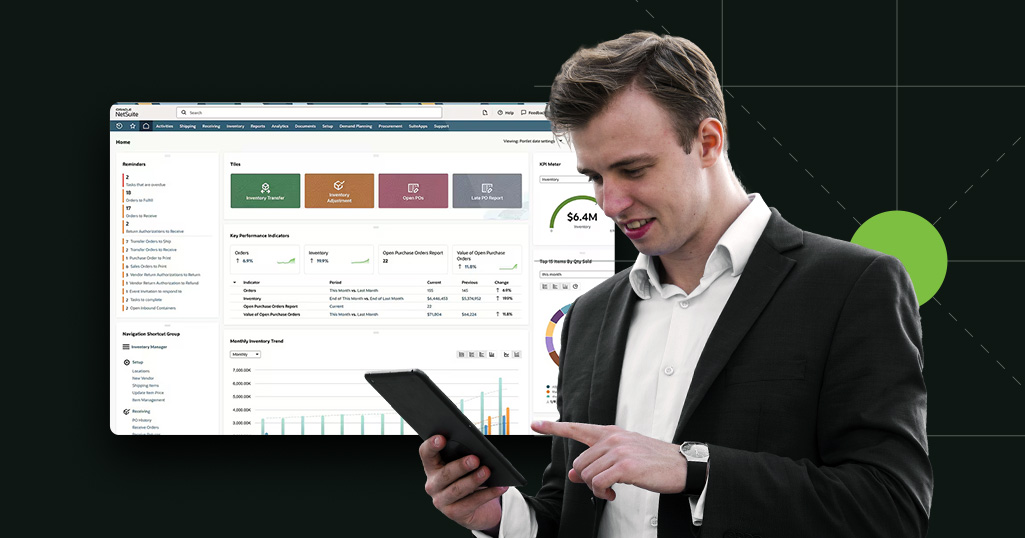
What Are Large ERP Systems
Large ERP systems are enterprise level platforms used to manage financial, operational, and reporting processes across complex, multi entity organizations.
They centralize data, standardize processes, and enable real time visibility across subsidiaries, business units, and geographies.
Why Enterprises Ask What Are the Large ERP Systems: Financial Pressure at Scale
CFOs and CEOs do not begin with technology. They begin with pressure.
Financial visibility becomes inconsistent across entities. Consolidation takes longer each quarter. Reporting depends on spreadsheets. Audit preparation becomes heavier with every new entity added.
Typical signals include:
- Delayed monthly close cycles
- Manual consolidation across subsidiaries
- Inconsistent reporting between business units
- Limited visibility into cash position
- Growing compliance exposure across jurisdictions
If your finance team spends time reconciling data across systems, the issue is not operational. It is architectural.
Large ERP platforms are evaluated when leadership needs:
- Consistent Financial Data
- Faster Decision Cycles
- Scalable Infrastructure for growth
Quick Summary for Executives: Large ERP Platforms USA at a Glance
What large ERP systems solve
- Consolidate financial data across entities
- Standardize reporting and controls
- Reduce reliance on spreadsheets
- Enable real time financial visibility
When companies need them
- Multi entity operations or rapid expansion
- Increasing audit and compliance requirements
- Disconnected systems across finance and operations
- Difficulty scaling existing tools
Cloud ERP vs legacy ERP
- Cloud ERP operates on a unified data model with real time access
- Legacy ERP often relies on multiple systems and batch processing
Where NetSuite structurally stands
- Unified platform across financials and operations
- Native multi entity consolidation
- Lower dependency on external tools
What Are the Large ERP Systems in the US Market: Comparison for Enterprises
| ERP | Best Fit | Architecture | Financial Strength | Complexity | Key Limitation |
| NetSuite | Mid market to upper mid market | Cloud native | Real time consolidation | Moderate | Less suited for highly customized manufacturing |
| SAP S/4HANA | Large enterprise | Hybrid or on premise roots | Deep financial control | High | Long implementation cycles |
| Microsoft Dynamics 365 | Mid to enterprise | Modular cloud | Flexible financial modules | Variable | Risk of fragmentation |
| Oracle ERP Cloud | Large enterprise | Cloud | Advanced financial capabilities | High | Complex ecosystem |
| Infor | Industry specific | Mixed | Sector focused | Variable | Limited unified financial layer |
ERP Breakdown with Trade Offs: ERP for Large Companies
NetSuite
When it fits
- Companies scaling across entities or geographies
- Organizations needing real time consolidation
- Businesses moving away from fragmented systems
When it does not fit
- Highly specialized manufacturing environments requiring deep customization
- Organizations already deeply invested in SAP ecosystems
Trade offs
- Standardization over heavy customization
- Faster deployment but requires process alignment
Implementation reality
- Structured and predictable compared to legacy ERP
- Requires clear financial process design
Organizations approaching ERP transformation often start with a structured NetSuite implementation aligned with financial architecture, not just system deployment.
SAP S/4HANA
When it fits
- Large global enterprises with complex supply chains
- Organizations requiring deep operational control
When it does not fit
- Mid market companies seeking speed and flexibility
- Organizations without capacity for long implementation cycles
Trade offs
- High control and depth
- Significant cost and complexity
Implementation reality
- Long timelines
- Heavy dependency on specialized resources
Microsoft Dynamics 365
When it fits
- Companies already operating within Microsoft ecosystem
- Organizations seeking modular flexibility
When it does not fit
- Companies needing a fully unified financial model
- Organizations without strong architectural governance
Trade offs
- Flexibility versus consistency
- Modular design can lead to fragmentation
Implementation reality
- Depends heavily on design discipline
- Integration must be carefully managed
Oracle ERP Cloud
When it fits
- Large enterprises requiring advanced financial capabilities
- Organizations with complex compliance needs
When it does not fit
- Companies prioritizing speed of implementation
- Organizations with limited internal ERP expertise
Trade offs
- Strong functionality
- Complex architecture and cost structure
Implementation reality
- Requires experienced teams
- Integration across systems can be complex
Infor
When it fits
- Industry specific organizations such as manufacturing or healthcare
- Companies needing tailored vertical solutions
When it does not fit
- Organizations requiring unified multi entity consolidation
- Businesses with complex global financial structures
Trade offs
- Industry depth
- Less standardization across financials
Implementation reality
- Varies by product
- May require additional tools for full financial visibility
Real World Scenarios: ERP Comparison for Enterprises
Scenario 1: Multi entity organization
A company operating across several states manages each entity in separate systems. Consolidation requires manual uploads and adjustments. Close cycles extend beyond deadlines.
A unified ERP introduces real time consolidation and removes dependency on spreadsheets.
Scenario 2: Company outgrowing entry level systems
A growing organization moves from QuickBooks to multiple tools for billing, reporting, and inventory. Data inconsistencies begin to affect financial reporting.
A single ERP replaces fragmented tools and restores data consistency.
Scenario 3: Enterprise over engineered environment
An organization implemented SAP for control but now faces long reporting cycles and high maintenance cost.
Simplifying architecture becomes a priority to regain agility.
Key Architectural Insight: Enterprise ERP Systems vs Fragmented Environments
Most ERP issues are not operational. They originate in system design.
Fragmented systems
- Multiple data sources
- Manual reconciliation
- Delayed reporting
Unified ERP architecture
- Single source of truth
- Embedded reporting
- Real time financial visibility
Integration plays a central role in this transition. Organizations that rethink architecture often align ERP with enterprise integration strategies to ensure consistency across systems.
Decision Framework: How to Evaluate Large ERP Systems
Financial control
- Can the system consolidate data in real time
- Does it reduce manual adjustments
Integration risk
- API driven or dependent on middleware
- Long term maintainability
Total cost of ownership
- Implementation effort
- Ongoing support and upgrades
Time to value
- How quickly financial visibility improves
Scalability
- Ability to support new entities and growth
Decision shortcut
- If your challenge is multi entity consolidation → consider NetSuite
- If your environment is highly complex manufacturing → consider SAP
- If you rely heavily on Microsoft tools → consider Dynamics
- If you need deep enterprise financial features → consider Oracle
Organizations already operating NetSuite often maintain performance through structured NetSuite support services aligned with evolving business needs.
Industry Impact: ERP for Large Companies Across Sectors
Hospitality
ERP connects financials with operational systems such as PMS and POS.
Healthcare
ERP supports compliance, billing, and financial reporting across regulated environments.
Real Estate
Multi entity structures require real time portfolio visibility and accurate consolidation.
Energy
Project based accounting and asset tracking demand structured financial control.
Professional Services
Revenue recognition and project profitability depend on accurate data integration.
ERP as Financial Infrastructure
Understanding what are the large ERP Systems is not about listing platforms. It is about selecting the structure that defines how financial data moves across the organization.
ERP decisions shape:
- Reporting Speed
- Data Accuracy
- Scalability
If your finance team is reconciling data manually, the system architecture is limiting your growth.
ERP should function as infrastructure, not as a collection of tools.
Most ERP failures are driven by early architectural decisions. This is where experienced partners add measurable value.
FAQs
1. What are the large ERP Systems used by enterprises in the US?
Large ERP systems include NetSuite, SAP S/4HANA, Microsoft Dynamics 365, Oracle ERP Cloud, and Infor. Each serves different levels of complexity and organizational scale.
2. Which ERP system is best for multi entity companies?
NetSuite is widely used for multi entity environments due to its native consolidation and unified data model.
3. What is the difference between enterprise ERP systems and smaller ERP tools?
Enterprise ERP systems support complex structures, multiple entities, and large scale reporting. Smaller ERP tools are limited in scalability and integration.
4. How do CFOs evaluate ERP systems?
CFOs focus on financial control, integration risk, total cost of ownership, time to value, and scalability.
5. Why do ERP implementations fail?
Failures are typically linked to architectural decisions, poor integration planning, and lack of alignment between system design and business processes.