The tension of a financial close is rarely about the accounting itself; it is about the reliability of the data sources. When a controller sits down to finalize the month end reports the most significant obstacle is often the reconciliation of numbers that originated in different systems. One report shows a specific revenue figure from the sales module while the ledger reflects a different amount. This discrepancy triggers a cycle of manual investigation that delays the close and erodes confidence in the final numbers.
What is the difference between NetSuite and Dynamics 365 regarding financial visibility? For an executive the answer determines whether the finance team acts as a strategic advisor or a data entry department. This analysis evaluates the fundamental architectural trade off between a unified data structure and a modular ecosystem and explains how that choice impacts your ability to manage a growing company.
The Core Architectural Difference: Unified vs Modular
The primary distinction between NetSuite and Microsoft Dynamics 365 lies in how they handle the relationship between different business functions.
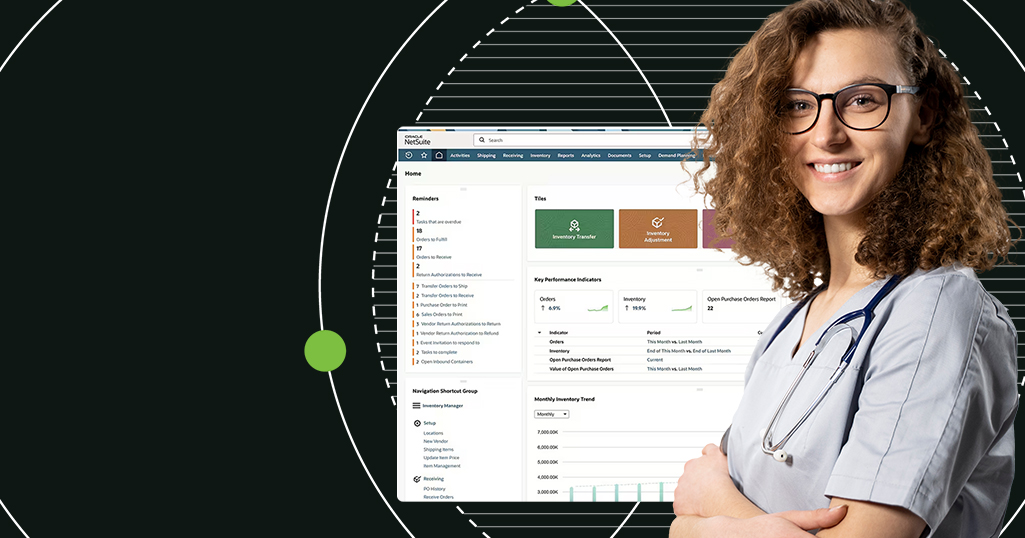
NetSuite operates on a unified database. This means that a transaction record exists in one place and is simply viewed differently by various departments. There is no need for a bridge between the sales order and the general ledger because they are part of the same data set. While no system is truly instant in all scenarios this architecture significantly reduces the time required for data to become available across the organization.
Microsoft Dynamics 365 is a modular platform. It is not a single software application but a suite of interconnected apps such as Dynamics 365 Finance and Dynamics 365 Sales and Dynamics 365 Supply Chain Management. These modules are powerful and highly specialized but they exist as distinct entities. Achieving a unified view requires an intentional strategy for data synchronization and governance.
Which ERP is Better for Finance and Multi Entity Consolidation?
For companies managing multiple subsidiaries or international operations the speed of consolidation is a critical metric. When evaluating Dynamics 365 vs NetSuite for multi entity environments the architectural choice becomes very apparent in the intercompany process.
In a unified architecture intercompany transactions are handled within the same database environment. When one entity sells to another the system can automate the elimination of that revenue and expense at the consolidated level. This reduces the risk of manual errors and ensures that the consolidated balance sheet remains accurate throughout the month rather than only after a series of year end adjustments.
Dynamics 365 supports complex multi entity scenarios but often requires more manual configuration to achieve the same result. Because entities may live in different legal entity folders or even different instances of the software the finance team must often use additional reporting layers like Power BI or Management Reporter to aggregate the data. For a growing company this added step can become a bottleneck during the close process.
Where Dynamics 365 is a Strong Fit
It is important to recognize that the modularity of Dynamics 365 is not a flaw; it is a design choice that offers extreme flexibility. Microsoft Dynamics is a valid and often superior option for specific types of organizations:
- Large Decentralized Enterprises: If your organization consists of semi autonomous business units that have vastly different operational needs a modular approach allows each unit to customize its own environment without breaking the corporate ledger.
- High Volume Manufacturing: For companies with deeply specialized shop floor or field service requirements the ability to build a bespoke module within the Microsoft stack is a major advantage.
- Azure and Power Platform Alignment: Organizations that have a massive internal team of Microsoft developers can treat Dynamics 365 as a toolkit. They can build custom apps and workflows that leverage the entire Microsoft ecosystem including Teams and Outlook in ways that a more standardized system might not allow.
In these cases the flexibility of a custom built environment outweighs the desire for a simplified financial close. The organization accepts the complexity of managing integrations because they need the software to bend to their unique processes.
The Trade Off: Flexibility vs Cohesion
The decision between these platforms is ultimately a balance between independence and alignment.
Dynamics 365 offers the independence of modules. If the sales team needs a highly customized CRM that is separate from the accounting logic they can have it. However this independence creates a need for synchronization. Data must flow through a translation layer which can introduce latency or errors if a field is updated in one module but not the other.
NetSuite prioritizes cohesion. It provides a standard structure that ensures every department is speaking the same language. While this might feel more restrictive to a department that wants a totally unique workflow it ensures that the finance team always has a clear and consistent view of the business. The trade off is that you trade some level of granular customization for a significantly faster and more reliable reporting cycle.
The Invisible Cost of Synchronization
One of the most critical observations for a CIO is what we call the cost of synchronization. In a modular environment the connections between modules require constant oversight.
- Operational Inconsistencies: Consider a scenario where a customer credit limit is reached. In a unified system the warehouse sees this immediately and can hold the shipment. In a modular system if the sync between the finance module and the warehouse module only happens every four hours the shipment might go out before the accounting team can stop it.
- Reconciliation Effort: If a sales tax rate changes in one module but the update fails to sync to the ledger the finance team must spend hours at the end of the month identifying which transactions are out of balance.
- Maintenance Cycles: Every time one part of the modular ecosystem is updated the IT team must verify that the bridges to the other modules still function. This creates a hidden labor cost that is often not reflected in the initial license price.
Human Impact: Burnout and Data Trust
The choice of ERP has a direct effect on the culture of the finance department. When an accounting team spends sixty hours a week during the close process just moving data between modules they lose the time necessary for strategic analysis. This leads to burnout and high turnover in key financial roles.
Furthermore if the leadership team cannot get a clear answer to a simple question like What is our total global cash position right now? without waiting for a manual data pull it erodes trust. A system that provides a unified view restores that trust and allows for faster and more confident decision making.
When Should a Growing Company Choose NetSuite over Dynamics 365?
As an architect I look for the point where the complexity of the business outpaces the capacity of the IT team. For most high growth companies NetSuite becomes the more viable option when:
- Speed to Value is a Priority: You need to stand up a financial system in months rather than years and you want to follow industry best practices rather than building a custom system from scratch.
- Lean IT Governance: You do not want to manage a fleet of developers just to keep your sales and finance modules talking to each other.
- Unified Reporting Needs: Your primary goal is to have one reliable version of the truth across multiple international subsidiaries without manual data aggregation.
Implementation Realities and Hidden Costs
It is a common misconception that one ERP is universally easier to maintain than the other. Both require a structured approach. However the hidden costs of Dynamics 365 often lie in the integration layer. While the entry price for a single module may be lower the cumulative cost of licensing multiple apps and maintaining the data bridges between them often exceeds the cost of a unified suite over a five year period.
NetSuite has its own challenges. Its strength is its standardized architecture but if a company tries to force it to behave exactly like a legacy manual process through excessive scripting they will lose the benefits of the unified structure. The key to success with NetSuite is to align your business processes with the system rather than the other way around.
Designing for Clarity
An ERP is the financial spine of your company. It should support your growth rather than creating operational drag. Selecting between NetSuite and Microsoft Dynamics 365 is ultimately a decision about the governance of your data and the long term capacity of your technical teams.
Microsoft Dynamics 365 provides a powerful and flexible toolkit for organizations that have the resources to build and maintain a custom integrated ecosystem. It is an excellent choice for those who view their software as a proprietary asset that requires ongoing development to match unique operational demands.
NetSuite serves as a unified foundation for companies that want to scale without increasing their administrative overhead. It is designed for the executive who values financial clarity and operational velocity. By matching the system architecture to the specific growth trajectory of the business an organization can ensure that their finance team moves from a state of constant reconciliation to one of true strategic insight.
FAQs
- What is the real difference between NetSuite and Dynamics 365?
The real difference is architectural. NetSuite is a single unified suite where all functions share one database. Dynamics 365 is a collection of modular applications that require active integration to share data. This means NetSuite generally offers faster financial visibility while Dynamics 365 offers more granular customization.
- Which one is better for multi entity consolidation?
NetSuite is widely considered the standard for multi entity management because its architecture allows for real time automated consolidation and intercompany eliminations. Dynamics 365 can handle multiple entities but often requires a more complex setup and additional reporting tools to achieve a consolidated view.
- Which ERP is easier to maintain for a small team?
NetSuite is typically easier to maintain for lean teams because it does not require managing the connections between different modules. Dynamics 365 usually requires a more technical administrator to handle the synchronization logic and updates between the various Microsoft applications.
- What are the hidden costs of Dynamics 365 modularity?
The hidden costs include the labor required to reconcile data between modules when syncs fail the cost of testing integrations during every update cycle and the potential for lost revenue due to data latency in critical functions like inventory or credit management.
- When should a growing company choose NetSuite over Dynamics 365?
A company should choose NetSuite when their priority is operational speed and they want to avoid the complexity of managing an integrated ecosystem. It is the preferred choice for organizations planning for an IPO or rapid international expansion where financial consistency is the most important factor.