Why CFOs Are Losing Trust in Their Numbers
“We close the month, then we spend days explaining the numbers.”
That is the real issue.
Not the ERP. Not the team. The structure.
Finance leaders across the US are dealing with the same pattern. Close cycles extend beyond a week. Reconciliation happens outside the system. Reports are questioned before they are used. Growth adds systems, and each system adds another point of failure.
At that point, the conversation changes.
ERP is no longer a system discussion. It becomes a financial control problem.
ERP integration strategy matters because it determines whether the business runs on verified data or on adjusted data. That distinction defines how fast you close, how confidently you report, and how well you scale.
What is ERP integration?
ERP integration is the way financial, operational, and transactional systems exchange and align data across the organization.
It ensures that revenue, costs, and operational activity are reflected consistently in financial reporting.
ERP integration matters because it determines whether finance teams rely on system outputs or manual reconciliation to produce accurate results.
Clear answer: ERP integration matters because it defines whether financial data is trusted at the source or corrected after the fact.
What is ERP architecture?
ERP architecture defines how data is structured and shared across the system.
A unified architecture operates on a single data model, while fragmented architectures rely on multiple systems connected through integrations.
This choice determines whether reporting is immediate and reliable or delayed and dependent on validation.
Clear answer: ERP architecture determines whether growth increases visibility or complexity.
What is middleware in ERP?
Middleware is a layer used to connect systems that do not share the same data structure.
It translates data between applications such as CRM, billing, and ERP platforms.
While useful, heavy reliance on middleware increases maintenance effort and introduces risk in financial reporting.
ERP Systems Comparison USA: Integration Architecture and Trade-Offs
ERP selection in the US market often focuses on features. That is the wrong lens. The real difference lies in how each system handles integration and financial data.
| ERP System | Architecture | Integration Model | Financial Consolidation | Multi-Entity Support | Complexity | Best Fit |
| NetSuite | Unified cloud platform | Native integration within system | Real time, built in | Strong | Moderate | Scaling companies needing visibility |
| SAP S/4HANA | Enterprise layered system | Middleware and custom integration | Advanced | Strong | High | Complex manufacturing and global ops |
| Microsoft Dynamics 365 | Modular cloud ecosystem | Connector based | Moderate | Moderate | Moderate to high | Microsoft-centric environments |
| Oracle ERP Cloud | Cloud with layered services | Integration tools and middleware | Strong | Strong | High | Large enterprises with complex finance |
| Infor | Industry-focused platforms | Middleware dependent | Moderate | Moderate | Moderate | Vertical-specific operations |
The structural distinction is simple.
Some systems reduce integration by design. Others manage it continuously.
ERP Integration Strategy: Why Structure Defines Financial Outcomes
Finance does not experience ERP through dashboards. It experiences it through effort.
When integration is fragmented, finance teams validate data instead of analyzing it. Close cycles extend. Reports require explanation. Audit preparation becomes manual.
When integration is structured, transactions flow once and appear everywhere. Financial reporting reflects operations without delay.
This is why many organizations begin with a structured review of their ERP integration strategy and financial architecture before selecting a system.
Clear answer: ERP integration matters because it determines whether finance operates as a control function or a reconciliation function.
Cloud ERP vs Legacy ERP: Where Integration Becomes a Long-Term Cost
Legacy ERP systems were not designed for interconnected environments. Integration was added later.
The result is predictable:
- Data exists in multiple places
- Updates occur in batches
- Reconciliation becomes permanent
Cloud ERP changes the environment, but not always the structure.
Some cloud systems replicate legacy complexity. Others simplify it through unified design.
NetSuite operates on a single data model. SAP and Oracle often operate across layers. Dynamics sits between flexibility and fragmentation.
The cost difference is not visible at implementation. It appears over time in:
- Integration maintenance effort
- Data inconsistencies
- Reporting delays
NetSuite vs SAP vs Dynamics vs Oracle: A Practical View for CFOs
A CFO does not need a feature comparison. They need clarity on trade-offs.
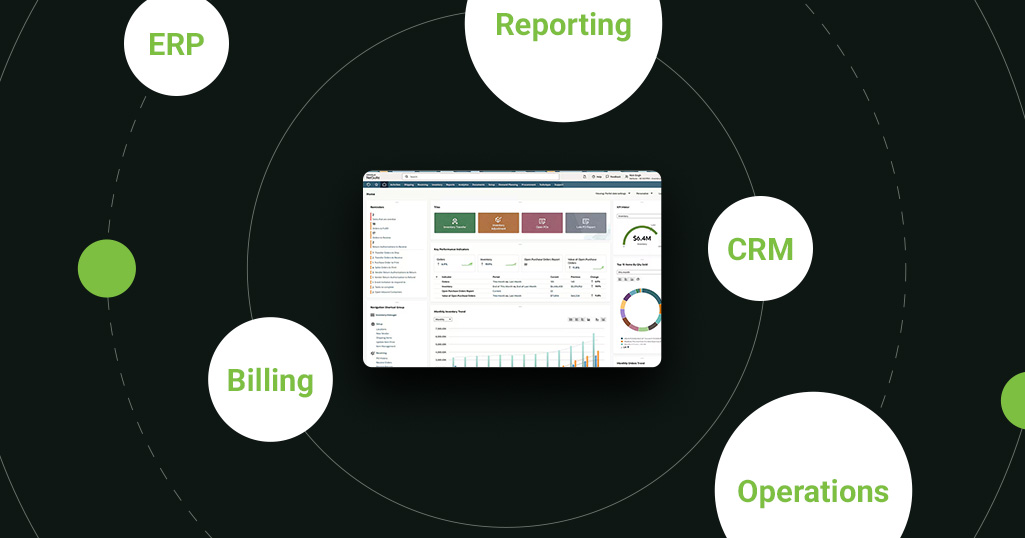
NetSuite simplifies integration at the core level. Financials, CRM, and operations share the same data. This reduces reconciliation effort and improves reporting speed.
SAP offers depth for highly complex environments. It handles advanced manufacturing and global compliance well. The trade-off is complexity and longer implementation timelines.
Dynamics provides flexibility within the Microsoft ecosystem. It works well when organizations rely heavily on Microsoft tools. However, multiple modules often require integration governance.
Oracle delivers strong financial capabilities for large enterprises. It supports complex structures but introduces layered integration.
Infor focuses on industry-specific functionality. It works well in verticals but can introduce integration challenges across entities.
Clear answer: NetSuite stands out when integration needs to be minimized at the financial core, not managed continuously.
Real-World Scenario: Multi-Entity Growth Without Integration Control
A services company expanded through acquisitions, growing from five to sixteen entities.
Each entity retained its systems. Consolidation required manual adjustments. Close cycles averaged ten days.
They implemented a modular ERP expecting flexibility.
Instead, integration became the bottleneck.
Data inconsistencies required manual validation. Reports were delayed. Audit preparation increased effort.
After restructuring into a unified ERP model:
- Close cycles dropped to five days
- Intercompany transactions were automated
- Reporting became system-driven
The improvement came from removing integration layers, not adding functionality.
Real-World Scenario: Hospitality Operator with Disconnected Revenue Systems
A hospitality group operated PMS, POS, and financial systems independently.
Revenue data reached finance with delays. Reconciliation was daily. Leadership lacked real-time visibility across properties.
Integration relied on middleware. Every operational change required technical adjustments.
By aligning operations and finance within a unified ERP structure, revenue flowed directly into financial reporting.
Organizations facing similar challenges often evaluate models like NetSuite hospitality ERP integration to connect operational and financial data.
Results included:
- Same-day revenue visibility
- Reduced reconciliation effort
- Improved property-level reporting
Quantifiable Impact: What Changes When Integration Is Structured
Across industries, similar patterns emerge when integration is redesigned:
- Close cycles reduced from 8–12 days to 4–6 days
- Manual reconciliation effort reduced by 30–50%
- Reporting accuracy improves significantly
- Integration maintenance costs decrease over time
These are not theoretical gains. They reflect structural changes in how data is managed.
How CFOs Should Evaluate ERP Integration Architecture
ERP selection should follow a structured evaluation, not a feature checklist.
Start with the data model. A single source of truth reduces reconciliation.
Assess integration dependency. Systems that rely on middleware for core processes increase long-term cost.
Evaluate financial visibility. Reporting should reflect real-time operations.
Consider scalability. Growth should not multiply integration points.
Analyze total cost. Integration maintenance often exceeds implementation cost.
Organizations often formalize this through a NetSuite implementation and integration assessment before making decisions.
Where NetSuite May Not Be the Right Fit
NetSuite is structurally strong, but not universal.
Highly specialized manufacturing environments may require SAP for advanced production planning.
Organizations deeply embedded in Microsoft ecosystems may prefer Dynamics.
Enterprises with highly customized financial structures may consider Oracle.
Recognizing these trade-offs increases decision quality.
How to Approach ERP Integration as a Strategic Initiative
ERP integration fails when it is treated as a technical task.
It succeeds when it is treated as a structural decision.
The wrong architecture leads to:
- Permanent reconciliation effort
- Delayed reporting
- Increasing system complexity
The right architecture enables:
- Real-time visibility
- Scalable operations
- Financial control
Bring IT operates as a global NetSuite partner with experience across industries, helping organizations align ERP design with business structure rather than forcing processes into systems.
Organizations evaluating their current state often begin with an ERP integration advisory and architecture review to define a path forward.
ERP Integration Is Financial Infrastructure
ERP integration is not a feature. It is the foundation of financial control.
It determines whether finance teams trust their numbers, how quickly they close, and how confidently they scale.
NetSuite provides a strong architectural foundation by reducing integration complexity at the core.
However, the outcome depends on design and execution.
ERP decisions are not about systems. They are about structure.
FAQs
1. What is ERP integration strategy?
ERP integration strategy defines how systems connect to ensure consistent financial and operational data across the organization.
2. Which ERP is best for integration in the US?
NetSuite is strong for unified integration. SAP and Oracle are better for highly complex environments. The best choice depends on structure.
3. How does ERP integration impact financial close?
It reduces manual reconciliation, allowing faster and more accurate close cycles.
4. What is the difference between cloud ERP and legacy ERP integration?
Legacy ERP relies on external integrations. Cloud ERP can provide real-time visibility with fewer dependencies.
5. Why is NetSuite implementation critical?
Implementation defines how systems are structured and connected, directly impacting scalability and financial control.