The High Cost of “Siloed” Information
“Choosing a Hotel POS does not start with the user interface; it starts with your financial operating model.”
For hotel CEOs and CFOs across the global markets, a Point of Sale (POS) system is either an engine for cash flow or a critical source of revenue leakage. As industry experts Jacob Sánchez and Pedro Salazar note, the real challenge today is not a lack of technology, but “siloed information” hidden in external spreadsheets and asynchronous processes. This fragmentation forces finance teams to act as the “manual glue” of the organization, validating every transaction by hand.
To protect profitability and EBITDA, the POS must be evaluated as a strategic control point for integration, auditability, and multi-property executive visibility.
1. Protecting EBITDA: Eliminating Technical Revenue Leakage
In the hospitality sector, margins often vanish in the “gap” between the outlet (restaurant, spa, bar) and the guest folio. Jacob Sánchez warns that additional services frequently go unbilled simply because the POS code is incorrect or out of sync with the ERP.
Strategic Evaluation Criteria for Income Control:
- Folio Traceability: Can the system track consumption from the initial order to the closing of the guest folio without manual intervention?
- City Ledger Management: How does the POS handle the complexity of tour operators and corporate accounts? The highest risk of revenue loss occurs during the reconciliation of these complex charges that are not settled immediately.
- Charge Integrity: Does the system automatically identify charges that were initiated but never posted to the General Ledger?
2. Strategic Integration: The PMS-POS-ERP Ecosystem
Operational maturity is reached only when production and payments flow into a single system of truth. Pedro Salazar identifies the Rooms-Finance axis as the area with the greatest inefficiency, where fragmentation forces teams to manually validate transactions, increasing the risk of human error and operational stress.
The “Single Source of Truth” Architecture:
- Real-Time PMS-POS Connection: Vital for preventing checkout friction. If a bar charge doesn’t reach the folio instantly, the guest may leave without paying, directly impacting the net margin.
- ERP Automation (NetSuite): The POS should not send simple “sales logs”; it must deliver structured financial information. This includes automated mapping of revenue categories to the General Ledger (GL) and correct the VAT treatment.
- USALI Standardization: Does the POS data structure support reporting aligned with the Uniform System of Accounts for the Lodging Industry? Without this foundation, benchmarking between properties is an impossible task.
3. Cash Flow Management: Advances and Deposits
Managing deposits and advances is a common blind spot. A strategic POS must distinguish between cash flow received and revenue recognition to protect the balance sheet.
- Liability Control: If a client pays a deposit for an event via POS, finance must track that liability accurately until the service is delivered.
- Daily Bank Reconciliation: The POS should automatically match transactions with payment processor settlements. Waiting until month-end to detect banking discrepancies is a control weakness that jeopardizes liquidity and executive decision-making.
4. Maturity Diagnosis: Where Does Your Organization Stand?
For a CEO or CFO, evaluating a POS requires understanding the maturity level of current processes:
| Maturity Level | Process Characteristics | Financial Impact |
| Low (Fragmented) | Disconnected teams, total dependency on Excel, asynchronous manual reconciliation. | High revenue leakage, human errors, high staff turnover due to stress. |
| Medium (Connected) | Basic POS-PMS integration, but financial reporting remains a monthly “discovery” process. | Delayed visibility, slow month-end close (10+ days). |
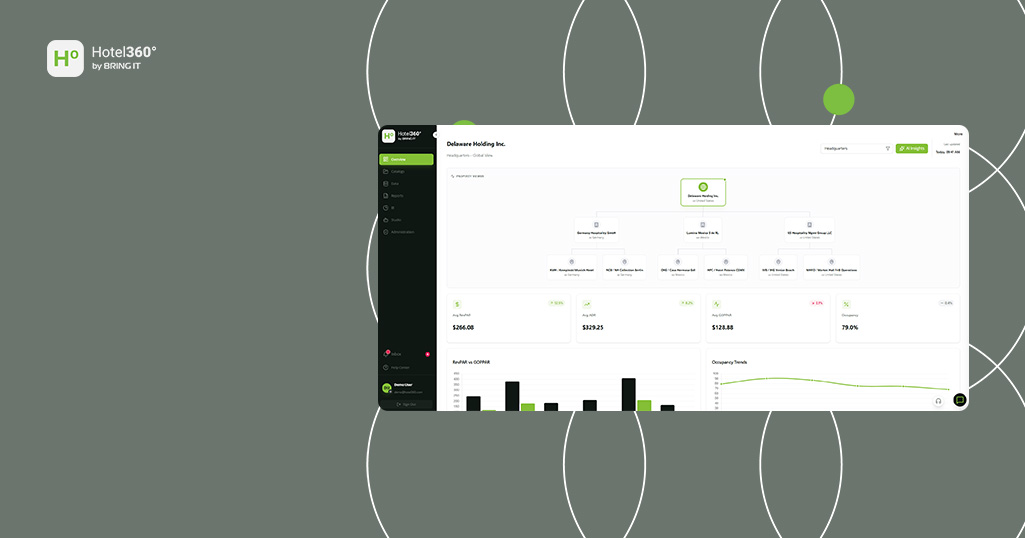
| High (Optimized) | Integrated PMS-POS-ERP ecosystem (Hotel 360). Data standardized under USALI with daily reconciliation. | Accelerated month-end close, protected EBITDA, decisions based on real-time margins. |
From Service Tool to Control Instrument
Choosing a POS is not a technology purchase; it is a financial architecture decision. For the CEO, the right system ensures scalable growth. For the CFO, it provides the traceability needed to protect margins and cash flow.
Evaluate Your Integration Readiness
Do not switch software without first understanding the maturity of your operating model. Bring IT specializes in NetSuite-centred architectures and our Hotel 360 solution, designed to connect your hotels’ operational reality with the executive control your leadership demands.
FAQs
- How does an integrated Hotel POS prevent revenue leakage?
Revenue leakage often occurs when ancillary charges (spa, bar) fail to post to the guest folio in real-time. An integrated POS ensures instant synchronization with the PMS and ERP, eliminating billing disputes at checkout and ensuring every transaction is accounted for in the General Ledger.
- What are the primary financial risks of using a siloed POS system?
The main risks include inaccurate cash flow reporting, high staff turnover due to manual reconciliation stress, and “City Ledger” leakage—where corporate or tour operator debts are not tracked effectively, leading to uncollected revenue and hit to EBITDA.
- Why is USALI compliance important for multi-property hotel groups?
USALI (Uniform System of Accounts for the Lodging Industry) provides a standardized framework for financial reporting. A POS that supports USALI allows CEOs and CFOs to perform accurate benchmarking across properties, ensuring consistency in margin analysis and investment decisions.
- How can a POS system accelerate the month-end closing process?
By automating the mapping of revenue categories to the ERP (like NetSuite) and performing daily bank reconciliations, an integrated POS removes the manual “discovery” phase of the closing cycle, allowing finance teams to close the books in days rather than weeks.
- What is the “Manual Glue” syndrome in hotel finance?
This refers to finance teams spending excessive time manually validating transactions and fixing errors in spreadsheets caused by fragmented systems. Solving this requires a “Single Source of Truth” architecture where POS, PMS, and ERP data flow seamlessly without human intervention.