The morning report shows every room is occupied. Guests are enjoying the spa, the restaurants are busy and your property based operations are moving exactly as they should. For most hotel groups, Opera PMS is the reliable engine behind this daily motion. It manages reservations plus guest stays and room activity with precision.
However, for a CFO or CEO, the operational success of a property is only half the story. The real question is whether the financial truth behind those operations is accurate, timely and controlled. As hospitality groups scale across multiple properties or transition into more complex management models, the gap between operational data and financial intelligence often becomes a significant business risk.
At Bring IT, we believe hospitality management solutions are no longer about finding a single system to do everything. Instead, leaders are adding NetSuite to their stack to act as the financial system of record, working alongside an Opera PMS NetSuite integration to provide a clear view of the entire business. This is not just a software addition. It is the design of a structure for growth.
Opera PMS Runs the Stay. NetSuite Runs the Financial Operating Model.
It is important to distinguish between operational execution and financial control. Opera PMS is designed to manage the guest journey from booking to checkout. It is exceptionally strong at handling property level tasks. But finance leaders need a different set of capabilities: consolidated reporting, automated reconciliation, statutory compliance and sophisticated cash flow modelling.
Jacob Sánchez, Account Executive at Bring IT, notes that the ideal model is not to force every department into one system. He believes each team should use the tool best suited to its work while finance receives integrated data. By positioning NetSuite as the financial backbone, you allow Opera to continue doing what it does best while finance gains a dedicated platform for strategic management.
This is not a conversation about replacing Opera. It is a conversation about building an architecture that supports scale and executive confidence.
Why PMS Data Becomes a Financial Risk When It Leaves the Property
Operational data is often messy. When information moves from the PMS into accounting and reporting layers, errors frequently occur. Revenue leakage is a silent killer in hospitality and Jacob Sánchez identifies that it often appears around deposits, folio closure, incorrect codes and services that never reach the invoice.
Without a sophisticated ERP like NetSuite to structure this data, these small leaks across hundreds of rooms and multiple properties can significantly erode margins. When systems are disconnected, finance teams find themselves chasing information. They depend on asynchronous communication with operations to resolve discrepancies. Once integrated, the finance team can manage everything from one system, ensuring that every service provided at the property is correctly accounted for in the books.
The CFO Bottleneck: Manual Reconciliation and Spreadsheet Dependency
Many hospitality finance teams still spend the first ten days of every month trapped in spreadsheets. They are manually reconciling data between the PMS, the point of sale systems and a legacy accounting tool. This manual burden is not just a process issue. It is a strategic cost that keeps CFOs from focusing on high value initiatives.
Pedro Salazar, Director of Industry Products at Bring IT, identifies this as a major hurdle. He explains that financial reconciliation is still one of the biggest manual bottlenecks when PMS, POS and ERP systems are not properly connected. This dependency on manual work introduces human error and delays the ability of the leadership team to see the true financial position of the group.
The evolution of hospitality starts with reducing wasted time so decision makers can focus on high value, high impact decisions. Moving away from spreadsheet based reporting allows the finance team to shift from data entry to data analysis.
Why Hospitality CFOs Are Adding NetSuite to Their Tech Stack
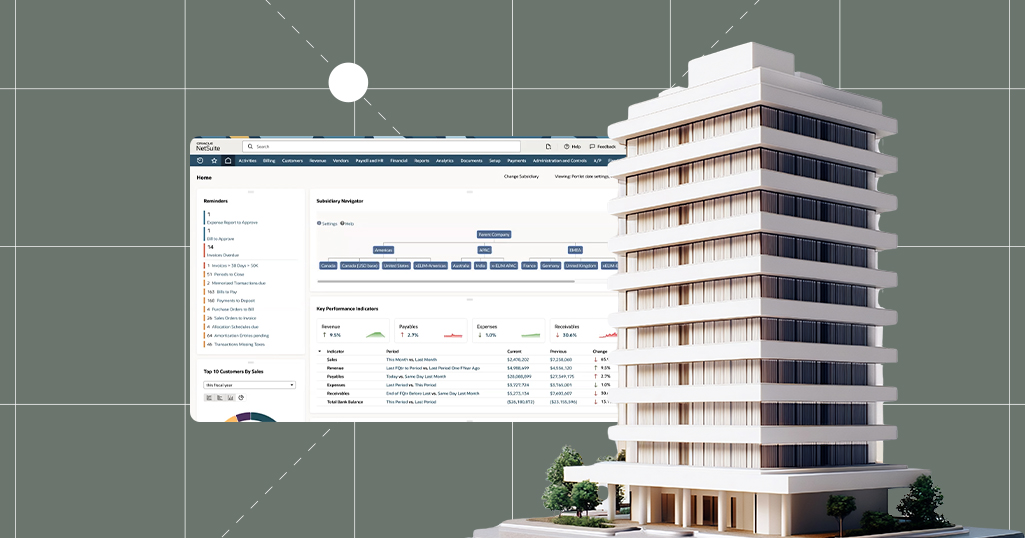
NetSuite provides a single source of financial truth. For a hotel group, this means having a General Ledger that can handle multi property environments with ease. It allows for seamless consolidation across different legal entities, even those operating in different currencies or tax jurisdictions common in the global markets.
By adding NetSuite to the stack, CFOs gain:
- Real time visibility: See the profitability of a single property or the entire group at any moment.
- Automated procurement: Control spending with standardised approval workflows.
- Clear audit trails: Ensure every transaction is traceable from the guest folio to the general ledger.
- Owner reporting: Generate consistent and professional reports for investors or property owners without manual effort.
NetSuite becomes the centre where operational data is structured and used for strategic decision making.
The Right Architecture: Opera, Hotel 360 and NetSuite
A modern hospitality tech stack requires a thoughtful architecture. In a successful setup, Opera PMS and other specialised tools like spa or restaurant systems feed operational data into a central hub.
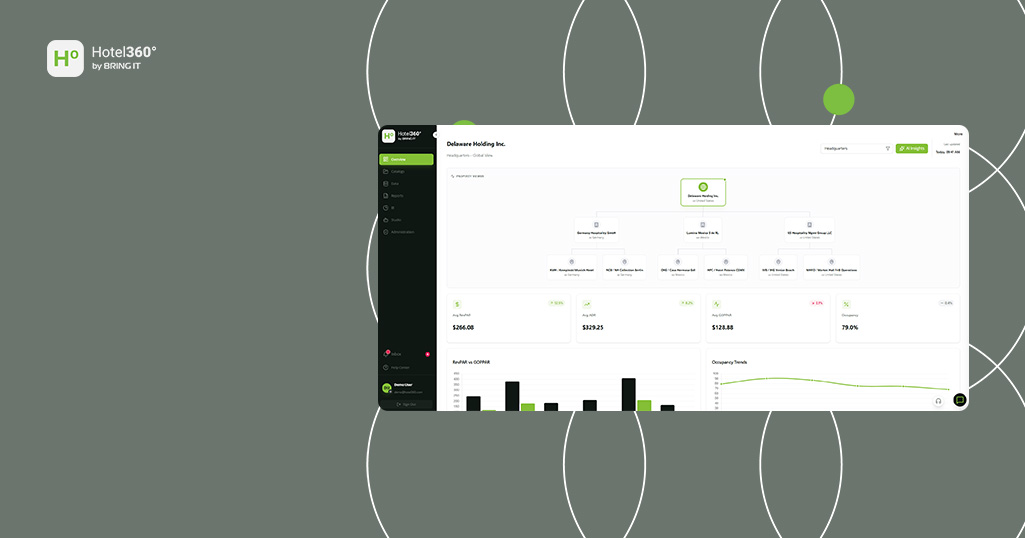
Bring IT utilises Hotel 360 as the integration layer that connects these property systems to NetSuite. This architecture ensures that information flows smoothly without losing detail. Jacob Sánchez believes that the ERP should be the destination for data that has been structured and controlled. This approach allows properties to keep specialised operational tools like Symphony or point of sale systems while finance gains the robust control layer they need.
Standardisation Is Where Hospitality Finance Gains Control
One of the most effective ways to improve financial performance is through standardisation. When every property uses a different way to categorise expenses or revenue, consolidated reporting becomes impossible.
Pedro Salazar suggests that hospitality businesses should standardise the chart of accounts and the month end close checklist. He advocates for using USALI (Uniform System of Accounts for the Lodging Industry) to help homogenise financial reporting. When your NetSuite environment is designed around these industry standards, you can accurately compare property performance and detect deviations before they become crises.
What CEOs and CFOs Should Evaluate Before Connecting Opera and NetSuite
If you are currently evaluating your financial stack, consider these questions to determine your readiness for a more integrated approach:
- Can finance trust the data coming from the PMS before the month end close?
- How many hours does the team spend manually reconciling deposits and folios?
- Are you able to see a clear audit trail for refunds and prepayments across all properties?
- Is your current chart of accounts aligned with USALI standards?
- Can leadership see cash flow and profitability without waiting for manual consolidation?
- Is your data architecture fragmented or is it ready to support advanced reporting and forecasting?
Why Bring IT
A successful ERP implementation in the hospitality sector is not just a technology project. It is a business transformation project. Many traditional integrators fail because they sell technology without selling knowledge of how a hotel actually operates.
At Bring IT, we combine deep expertise in NetSuite with a practical understanding of hospitality operating models. We are local experts who understand the financial landscape. We do not just connect software. We help you design the financial structure behind your growth. Our commitment is to ensure that your technology serves your people, your processes and your profit.
Opera Runs the Hotel. NetSuite Helps Finance Run the Business.
Opera and NetSuite are both essential, but they solve different problems. Opera ensures your guests have a great stay. NetSuite ensures your business remains profitable and scalable.
By integrating these two powerhouses, hospitality groups can achieve faster closes, reduced revenue leakage and better visibility. The result is a scalable finance architecture that provides the clarity needed to grow with confidence.
FAQs
- Does NetSuite replace Opera PMS?
No. NetSuite is an ERP designed for financial management and global business control. Opera is a Property Management System designed for hotel operations. They are most effective when they work together, with Opera handling the guest stay and NetSuite handling the books.
- Why do hotels need NetSuite if they already use the accounting features in Opera?
While Opera has basic billing features, it is not a full financial system of record. NetSuite provides advanced capabilities including multi entity consolidation, automated accounts payable, procurement control and sophisticated financial reporting that a PMS cannot provide.
- What is the main value of integrating Opera PMS with NetSuite?
Integration eliminates manual data entry and reduces the risk of human error. It ensures that guest production plus payments and deposits flow automatically into your financial reports, giving finance leaders a real time view of profitability.
- How does NetSuite help hospitality CFOs reduce reconciliation work?
NetSuite automates the matching of PMS data with bank statements and general ledger entries. By using a specialised integration layer like Hotel 360, finance teams can resolve discrepancies by exception rather than manually checking every transaction.
- Why should hospitality groups work with Bring IT for NetSuite and Hotel 360?
Bring IT understands the unique pressures of the hospitality market. We provide more than software implementation. We offer the industry knowledge required to standardise your financial operations and ensure your tech stack supports long term growth.