Short answer: track every payment you make to your franchisor in its own account (royalties, ad fund, technology and other brand fees), record them by location, and check them each month against the gross sales your POS reported. If your agreement excludes some revenue from the royalty base, make sure your books exclude it too.
Why Franchise Fees Deserve Their Own Process
As a franchisee, a large share of what you earn flows back to the brand before you pay rent or staff. Most of it is calculated from your sales, collected automatically and reported on the franchisor’s statement, not yours. If you only record the bank withdrawal, you lose the ability to answer three simple questions: what did I pay, what was it based on, and was it right?
That matters more as you grow. With one location, a mistake costs you a little. With five, the same mistake repeats five times every month.
The Fees Most Franchisees Pay
| Fee | Usually based on | Where o check it | Book it to |
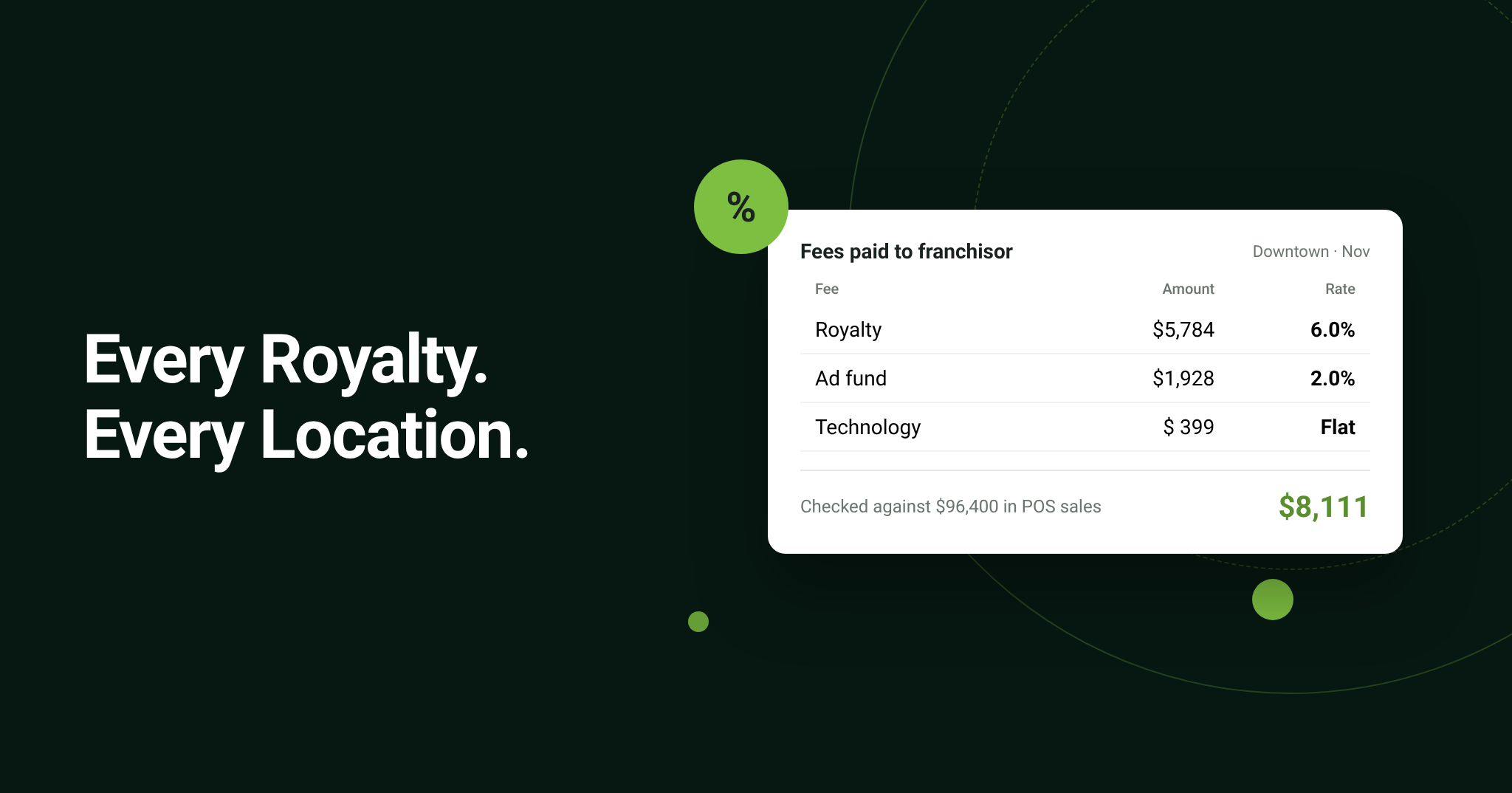
| Royalty | A percentage of gross sales set in your agreement | POS sales report and franchisor statement | Royalty fees expense |
| Ad or marketing fund | A percentage of gross sales on a flat amount | Franchisor statement | Ad fund contribution expense |
| Techonology fee | Flat monthly amount or percentage | Franchisor invoice | Technology fees expense |
| Local marketing requirement | A minimum spend you control | Your own marketing invoices | Local advertising expense |
| Initial franchise fee | One time, at signing | Franchise agreement | Ask your CPA (usually capitalized, not expensed) |
Rates vary widely by brand and by category. Your franchise agreement is the only number that counts, so start there rather than with an industry average.
Step 1: Give Every Fee Its Own Account
The most common mistake is a single “franchise fees” account. Royalties, ad fund and technology fees behave differently: the royalty is the cost of using the brand, the ad fund is money pooled into marketing you don’t control, and the technology fee is a subscription. Mixed together, you can’t see whether any one of them changed.
Keep local marketing separate from the ad fund as well. One is spend you decide; the other is a contribution you owe.
Step 2: Record Fees by Location
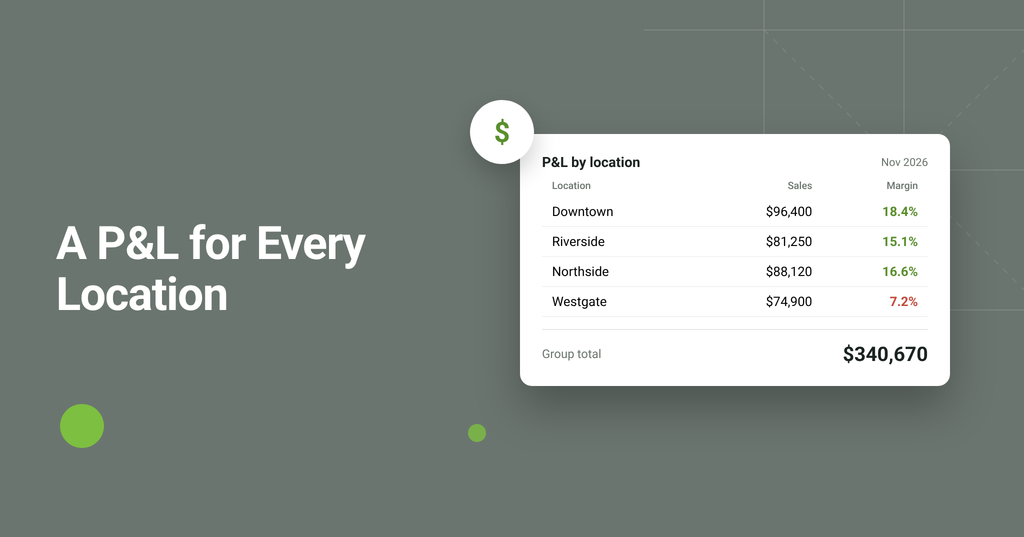
f you run more than one unit, record every fee against the location that generated the sales. That lets you compare locations fairly and spot a unit whose fees don’t match its sales. It is also the foundation for a P&L by location, which is where most multi-unit owners want to end up.
Step 3: Use the Same Sales Number Your Franchisor Uses
Royalties are calculated on a defined sales base, usually gross sales as your agreement defines them. Read that definition closely. Agreements often exclude items such as sales tax, refunds, discounts or gift card sales, and some franchisors publish reports that separate fee eligible revenue from non eligible revenue.
Delivery apps add another layer. Cancelled or adjusted orders should not carry fees, but they can if the sales data isn’t cleaned first.
Step 4: Reconcile Every Month
Once a month, for each location:
- Pull gross sales from your POS for the period.
- Apply the rates in your agreement to the eligible sales.
- Compare the result with the franchisor’s statement and the amount withdrawn from your bank.
- Investigate any difference before the next payment cycle.
Keep the calculation with your month end close. If a question comes up later, you’ll have the sales, the rate and the payment in one place.
Step 5: Put It on One Dashboard
Spreadsheets work for one location. Past that, most franchisees want a single view: royalties, ad fund and other brand fees, by location and by month, next to the sales that drove them.
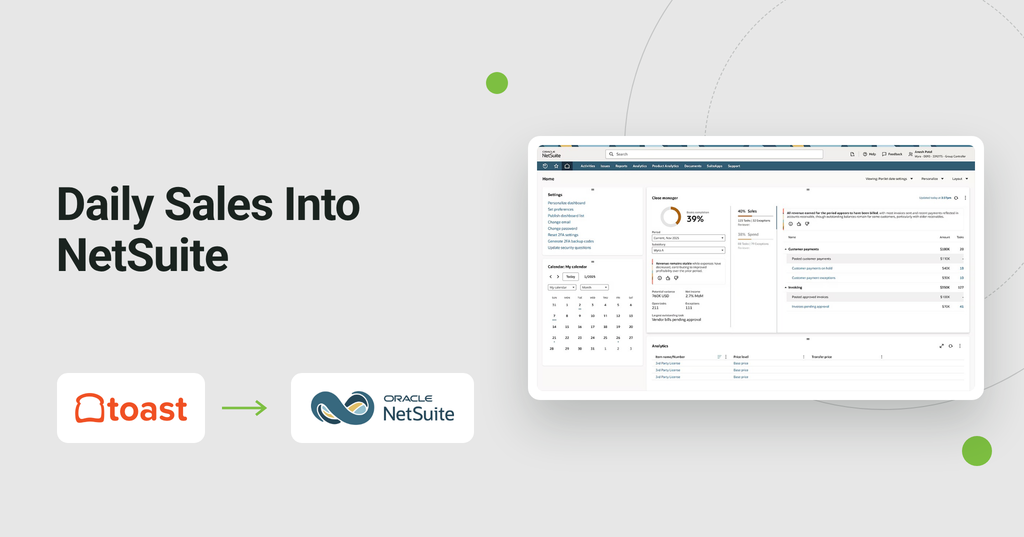
That’s what the Franchisee package of AI Rapid Start for Franchisees sets up in NetSuite. Daily sales from your POS post to NetSuite by location, and dashboards and KPIs show the royalty payments you make to your franchisor, so you can check every charge against real sales.
Is Your Current System Keeping Up?
Three signs the process has outgrown the tools around it:
- The calculation lives with one person. If only your bookkeeper can explain how the royalty figure was reached, the business carries a risk it cannot see.
- POS totals are retyped. Every manual step between the register and the ledger is a place for a fee to be calculated on the wrong number.
- Each location is a separate file. Comparing fees across units means rebuilding a spreadsheet every month, and it gets more fragile with each opening.
If that sounds familiar, the question is usually not the bookkeeping but the system underneath it. Our guide to whether your multi-unit franchise has outgrown QuickBooks walks through the options, including staying where you are.
Frequently Asked Questions
How often should a franchisee reconcile royalty payments?
Monthly, on the same cycle as your close. If your franchisor collects weekly, reconcile weekly sales to weekly charges and review the month as a whole.
Should the ad fund be recorded as marketing expense?
Record it separately from the marketing you control. It’s a required contribution to a pooled fund, and mixing it with local marketing hides how much you actually choose to spend.
What if my calculation doesn’t match the franchisor’s statement?
Check the sales definition in your agreement first, especially exclusions for tax, refunds, discounts and delivery adjustments. If the gap remains, share your calculation with the franchisor’s finance team.
Is the initial franchise fee a royalty?
No. It’s a one time payment at signing and is usually recorded differently from ongoing fees. Ask your CPA how to treat it.
Can I see royalties and fees by location in NetSuite?
Yes. When daily POS sales post to NetSuite by location, royalties, marketing fees and other brand fees can be reported against the sales that produced them, by location and by month.