If you’ve been following NetSuite for any length of time, you know the pattern: annual conference, new features announced, incremental improvements to analytics or UI, partners applaud, users upgrade when convenient.
SuiteWorld 2025 broke that pattern.
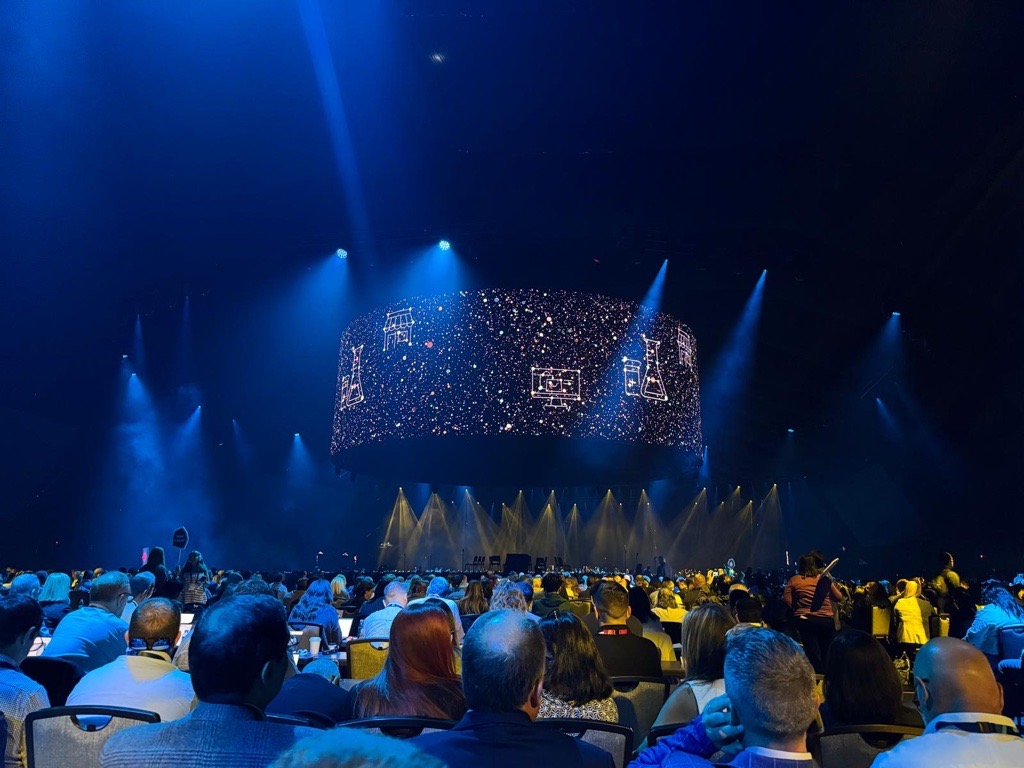
Somewhere between the Vegas theatrics and Evan Goldberg’s keynote, NetSuite declared something most ERP vendors won’t admit: the era of systems that just store what happened is ending. What’s replacing it? Systems that understand context, propose solutions, and act on your behalf.
NetSuite Next AI ERP isn’t a feature drop. It’s a fundamental reimagining of what an ERP should do for your business.
The Shift Nobody’s Talking About Enough
For decades, ERP systems have been glorified filing cabinets, sophisticated ones, sure, but fundamentally backward-looking. You entered data, ran reports, analyzed what had already occurred, then went somewhere else to actually do something about it.
NetSuite Next flips this relationship. With conversational AI baked into the core (not bolted on as an afterthought), agentic workflows that execute tasks autonomously, and a natural language interface that eliminates the need to memorize menu paths, the platform transforms from historian to collaborator.
This matters because it changes the fundamental question businesses ask their ERP: from “What happened?” to “What should we do next?”
Goldberg put it simply during the keynote: “Cloud gave you access. AI gives you action.” And he’s right. But action without governance is chaos, which is why how NetSuite built this matters as much as what they built.
What Actually Makes NetSuite Next AI ERP Different
Let’s cut through the buzzwords and talk about what’s genuinely new:
Ask Oracle isn’t another chatbot. It’s a natural language layer that sits across your entire NetSuite instance, not a separate tool you toggle to. Ask a question in plain English, and it doesn’t just return an answer. It shows you the source data, explains its reasoning, generates visualizations, and offers actions you can take without leaving the conversation. It understands your role, your permissions, and your business context.
AI Canvas turns analysis into collaboration. Instead of emailing spreadsheets back and forth, teams work inside a shared visual workspace where they can analyze problems, scenario plan, and trigger workflows—all grounded in live NetSuite data. It’s what strategic planning looks like when your ERP is actually part of the strategy session.
Agentic workflows don’t just automate—they reason. Traditional automation breaks when exceptions occur. Agents adapt. They can handle payment prioritization based on natural language goals (“prioritize vendors offering early payment discounts”), manage vendor selection by analyzing multiple variables, and reconcile accounts by identifying and resolving exceptions autonomously. The key difference? You decide whether they execute automatically or present recommendations for approval.
Document intelligence closes the data entry gap. NetSuite Next can read, interpret, and act on invoices, contracts, PDFs, receipts, and policy documents. That means less manual data entry, fewer errors, and faster processing, but also the ability to validate information against existing records and flag inconsistencies before they become problems.
Why This Matters for Finance Leaders
If you’re a CFO, the autonomous close capability alone should get your attention. Instead of a frantic sprint at month-end, NetSuite Next continuously reconciles throughout the period. Exceptions surface in real time. Accruals are identified and can even be entered automatically based on your governance rules. The Close Manager agent visualizes progress across all activities, so when it’s time to close, you’re confirming work that’s already done rather than racing to finish it.
The result? Continuous forecasting becomes possible. When your actuals are always current, your predictive models stop being theoretical. Forecast accuracy improves because the foundation never goes stale.
Planning and budgeting become smarter too, with AI-powered predictions that don’t just show you a number; they explain confidence ranges, analyze connected drivers (such as sales, marketing spend, and inventory), and surface insights about what’s actually influencing outcomes.
For subscription-based businesses, the new Subscription Metrics dashboard provides a single view of MRR, ARR, LTV, NRR, and CAC payback, along with cohort analysis and constant-currency support across entities. AI-generated narrative summaries will explain what the metrics mean and what’s driving changes.
What IT Directors Need to Know
Here’s the part that often gets glossed over in product announcements but matters enormously: NetSuite Next isn’t a migration. You switch it on. Your data stays put. Your customizations remain intact. Your integrations keep working.
This is possible because NetSuite rebuilt the user experience layer without touching the underlying architecture, though they did re-engineer performance foundations to handle the real-time demands AI creates.
The platform runs on Oracle Cloud Infrastructure, which means you inherit OCI’s security, scalability, and performance capabilities. But it also means NetSuite Next respects your existing role-based permissions, data governance policies, and compliance requirements. The AI operates within the guardrails you’ve already established.
For organizations worried about AI hallucinations or ungoverned outputs, this design matters. Every insight Ask Oracle provides is traceable to source data. Every agent action is auditable. The system explains its reasoning, not just its conclusions.
The Partnership Ecosystem Gets Smarter Too
NetSuite announced the SuiteApp.AI Marketplace alongside Next, which signals something important: they’re not trying to build every possible AI capability themselves. Instead, they’re creating a framework where specialized partners can build certified AI agents that operate natively within NetSuite.
The BILL partnership demonstrates this perfectly. Rather than forcing users to jump between systems, BILL’s payment automation now runs inside NetSuite, extracting invoices, matching transactions, proposing payments based on natural language goals, and reconciling everything without leaving the platform.
For SuiteCloud developers, NetSuite introduced frameworks for building custom agents, AI toolkits that expose NetSuite’s own AI services (Document AI, Narrative Insights, Knowledge AI), and studios where admins can tune prompts and outputs before deploying them.
The MCP (Model Context Protocol) Connector is particularly significant, it allows external AI systems like ChatGPT or Claude to connect directly to your NetSuite environment through a governed protocol. This opens the door for innovation while maintaining control over what those systems can access and do.
The Readiness Question
Here’s what most announcements won’t tell you: capability and readiness are different things.
NetSuite Next will be available for North American customers within the next 12 months. That timeline isn’t just about Oracle’s development schedule; it’s also your window to prepare.
Because here’s the reality: AI doesn’t fix bad data. It amplifies it. Agents don’t create good governance; they operate within it. And intelligent automation doesn’t succeed in organizations that haven’t defined what success looks like.
The companies that will get the most value from NetSuite Next are the ones asking these questions now:
- Is our data clean enough for AI to generate reliable insights?
- Are our roles and permissions structured to govern what agents can access and change?
- Do we have processes documented well enough for agentic workflows to learn from them?
- Have we identified use cases where AI could deliver measurable impact, not just novelty?
- Is our team prepared to work alongside intelligent systems rather than just use software?
These aren’t technical questions. They’re transformation questions.
What Brings This Together
The announcement of NetSuite Next represents something larger than a product update. It’s a signal that enterprise software is entering a new phase, one where systems don’t just respond to commands but actively participate in running the business.
For organizations already on NetSuite, this is an opportunity to dramatically expand what the platform does for you, but only if you approach it strategically. For companies evaluating ERP options, the question is no longer “Which system has the best features today?” but “Which platform is architected for the intelligence layer that’s coming?”
At Bring IT, we’ve spent years helping companies achieve true business transformation through technology, not just implementations, but strategic overhauls that create 360° visibility and measurable outcomes. The shift to intelligent ERP doesn’t change that mission. If anything, it makes it more critical.
Because the organizations that thrive in this next era won’t be the ones who simply turn on new features. They’ll be the ones who prepared for them, who built the foundation of clean data, strong governance, clear processes, and strategic clarity that allows AI to do what it’s actually designed to do: augment human capability, not replace human judgment.
NetSuite Next is powerful. But power without preparation is just potential.
The question is: what are you doing with your next 12 months?

Ready to explore what NetSuite Next could mean for your business? Bring IT specializes in business transformation and strategic ERP solutions that go beyond standard implementations. Let’s talk about how to position your organization for the next generation of intelligent systems. Contact us to start the conversation.