


Bring IT’s Data Services practice is built to solve the structural challenges behind NetSuite environments: integration complexity, migration risk, reporting limitations, and fragmented data ecosystems.
We design data architecture, not just implementations.
Our approach combines

Integration engineering
Proprietary migration frameworks

Structured analytics environments

Governance-first design
So your NetSuite envivronment remains scalable, reliable, and AI-ready
What We Mean by Data Services
Data Services go beyond ERP setup. They define how data moves, how it is validated, and how it becomes actionable
 Integration architecture across business systems
- Enterprise-scale data migration into NetSuite
 Advanced reporting and BI enablement
 Governance and data quality frameworks
This is the difference between “having NetSuite” and running a reliable digital backbone.
Our Data Services
Capabilities
Data Integration Architecture
Disconnected systems create operational blind spots
and reporting inconsistencies
Bring IT designs integration ecosystems that connect NetSuite with:
- CRM platforms
- eCommerce systems
- Payroll and HR tools
- Banking and payment providers
- Data warehouses and BI platforms
We do not simply deploy connectors. We define long-term integration
architecture with scalability, observability, and governance in mind.
Data Migration: The Data Bridge Framework
Data migration is the highest-risk phase of ERP transformation.
Bring IT designs integration ecosystems that connect NetSuite with:
- Record limits per job
- File size caps
- Manual validation processes
- Transaction line constraints
To address this, Bring IT developed the DataBridge Framework, a proprietary migration methodology designed for validation, auditability, and scale.
- Direct source extraction into controlled staging environments
- Structured transformation and normalization
- Automated validation rules prior to upload
- API-driven, monitored data loads into NetSuite
The result is reduced rework, improved accuracy, and controlled go-live execution.
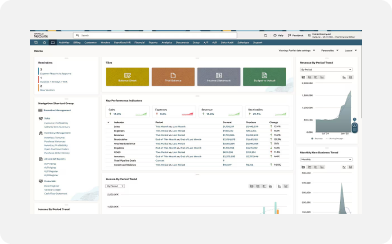
Data Analytics & Reporting (BI & Dashboards)
As organizations scale, native NetSuite saved searches become insufficient.
We help organizations determine the right analytics architecture:
- NetSuite Analytics Warehouse (NSAW) for structured NetSuite-native analytics
- Domo for cross-platform, AI-powered BI environments
Our role is advisory and architectural — not tool-centric.
We design reporting ecosystems aligned to executive KPIs, operational visibility, and long-term data maturity.
Our Technology Ecosystem
We partner with best-in-class platforms, organized by capability
Integration Platforms


Analytics & BI Platforms



We select tools based on architectural fit, not preference
When Organizations Engage Our Data Services Team
You likely need structured data services if:
You are migrating from a legacy ERP to NetSuite

Your reporting relies heavily on manual reconciliations

You operate across multiple subsidiaries

Your integrations are fragile or undocumented

Executive visibility is limited or delayed

You are preparing for advanced analytics or AI initiatives

Structured Migration Versus Manual CSV Upload
Manual CSV imports may work for simple uploads. However, enterprise
environments benefit from structured migration frameworks

Manual CSV Process
- Limited validation controls
- Higher risk of dependency conflicts
- Manual correction cycles
- Reduced audit visibility

Structured Migration Approach
- Staging environments for review
- Transformation scripts and mapping controls
- Automated validation rules
- Reconciliation checkpoints
- Controlled load sequencing
The difference lies in introducing architectural discipline into the migration process.
FAQs
NetSuite data services encompass integration, migration, analytics, and governance strategies that ensure ERP data is accurate, connected, and scalable.
The most reliable approach is a structured ETL-based migration framework with automated validation and API-driven upload, not manual CSV imports.
Integration can be implemented via iPaaS platforms such as Celigo or Boomi, Oracle Cloud Integration, or custom API frameworks, depending on system complexity.
NetSuite Analytics Warehouse provides structured ERP analytics while Domo enables cross-platform business intelligence. Many organizations use both platforms together to combine NetSuite data with data from other business systems.
Why partner with Bring IT
Most partners configure NetSuite


Bring IT engineers the data foundation behind it
We focus on long-term architecture, controlled migration, integration resilience, and scalable analytics environments that support growth
Design a Scalable Data Foundation for NetSuite
Whether you are preparing for migration, restructuring integrations, or enabling advanced analytics, our Data Services team can define the right architecture