

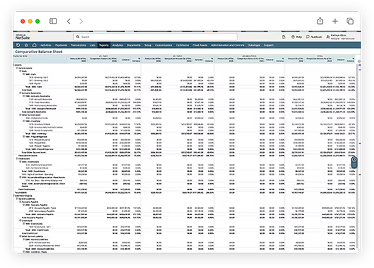
Bring IT delivers structured NetSuite data migration services that reduce risk, introduce validation discipline, and align migration with long term integration and analytics strategy.
Configuration gaps can be corrected.
Process inefficiencies can be optimized.
But flawed data structures compromise reporting, compliance, and operational confidence long after go live.
Our migration services operate within our broader Data Services architecture, ensuring your data foundation supports future reporting and analytics initiatives
Why NetSuite Data Migration Requires a Structured Approach
NetSuite provides native CSV import functionality that can support simple data uploads. However, enterprise migrations introduce additional complexity such as
 Large data volumes
 Multi-subsidiary structures
 Custom records and fields
 Historical transaction dependencies
 Reporting continuity requirements
Without proper preparation and validation, migration errors can create reconciliation issues that affect finance, operations, and reporting environments.
Our NetSuite Data Migration Methodology

Bring IT developed a proprietary migration toolkit and methodology to introduce structure, automation, and validation into complex ERP migrations.

This framework enhances native NetSuite capabilities by preparing and validating data before it is loaded into the system.
The migration process begins with structured extraction of data from legacy systems.
Data may originate from:
- Legacy ERP systems
- Accounting platforms
- Databases and internal applications
- Cloud-based operational systems
Data is extracted into a controlled staging environment for review and preparation for transformation.
If your organization operates multiple connected platforms, the extraction strategy is coordinated with your broader integration architecture
Once extracted, data must be transformed to align with NetSuite’s data model.
Bring IT’s DataBridge framework includes a library of pre-built migration templates designed for common NetSuite data structures, including:
- Chart of accounts
- Customers and vendors
- Items and inventory records
- Open transactions
- Historical balances
These templates accelerate migration by standardizing mappings for typical NetSuite implementations and reducing manual preparation work.
However, every organization introduces unique complexity through custom fields, custom records, and specific business processes.
For these scenarios, our migration team works closely with stakeholders to:
- Identify customer-specific data structures
- Gather and document business rules for data transformation
- Configure migration mappings for custom objects and fields
- Validate relationships between records and transactional data
During this phase, data is normalized and transformed to align with NetSuite structures such as:
- Chart of accounts hierarchy
- Subsidiary frameworks
- Customer and vendor relationships
- Item and inventory structures
- Custom records and fields
Transformation logic is also aligned with long-term reporting and analytics strategy to ensure migrated data supports future analytics environments such as NetSuite Analytics Warehouse.
Before data is loaded into NetSuite, validation controls are applied to detect potential issues.
Validation checks typically identify:
- Missing required fields
- Referential integrity conflicts
- Data format mismatches
- Imbalanced transactions
Reconciliation checkpoints ensure migrated balances and transactions align with source system data, reducing the risk of post-migration discrepancies.
Once data has been validated, it is loaded into NetSuite using structured sequencing and controlled execution processes.
Data loads are monitored to ensure records are created successfully and dependencies between objects are maintained.
The goal is not simply to move data into NetSuite, but to ensure that the data entering the system is reliable, consistent, and ready for operational use.
How Migration Impacts Integration and Analytics
Data migration is not an isolated technical activity
The quality of migrated data directly affects

System integrations

System integrations

Executive dashboards
Financial reporting
Clean, well-structured migration ensures that NetSuite can operate as a reliable foundation for future integrations and analytics platforms
Migration is also foundational to your broader
NetSuite Data Services architecture
Structured Migration Versus Manual CSV Upload
Manual CSV imports may work for simple uploads. However, enterprise
environments benefit from structured migration frameworks
Manual CSV Process
- Limited validation controls
- Higher risk of dependency conflicts
- Manual correction cycles
- Reduced audit visibility

Structured Migration Approach
- Staging environments for review
- Transformation scripts and mapping controls
- Automated validation rules
- Reconciliation checkpoints
- Controlled load sequencing
The difference lies in introducing architectural discipline into the
migration process.
When to Engage NetSuite Data Migration Services
Organizations typically engage structured migration services when:

Migrating from another ERP system

Consolidating multiple legacy platforms
Operating across multiple subsidiaries

Migrating historical transactions

Preparing for advanced reporting and analytics environments
A well-executed migration ensures NetSuite becomes a reliable operational and analytical platform from day one.
Why partner with Bring IT
Most NetSuite partners treat migration as a configuration phase

Bring IT treats migration as foundational data infrastructure.
Our objective is long-term data integrity, not short-term upload completion.
We differentiate through:
- Proprietary migration toolkit and methodology
- Structured validation discipline
- Alignment between migration, integration, and analytics
- Enterprise scale governance mindset
- Cross functional coordination across finance and operations
FAQs
A structured migration methodology that includes staging, transformation, validation, and reconciliation significantly reduces enterprise risk.
CSV import offers limited validation control and may introduce risk in large or complex data environments.
Yes. Historical transactions can be migrated when structured transformation and reconciliation controls are implemented.
NSAW Services
Domo Services
Engineer Your NetSuite Migration with Structure and Visibility
Schedule a migration strategy session with our NetSuite data specialists and design a migration approach aligned with your business architecture.